One-Page Guide to Turing
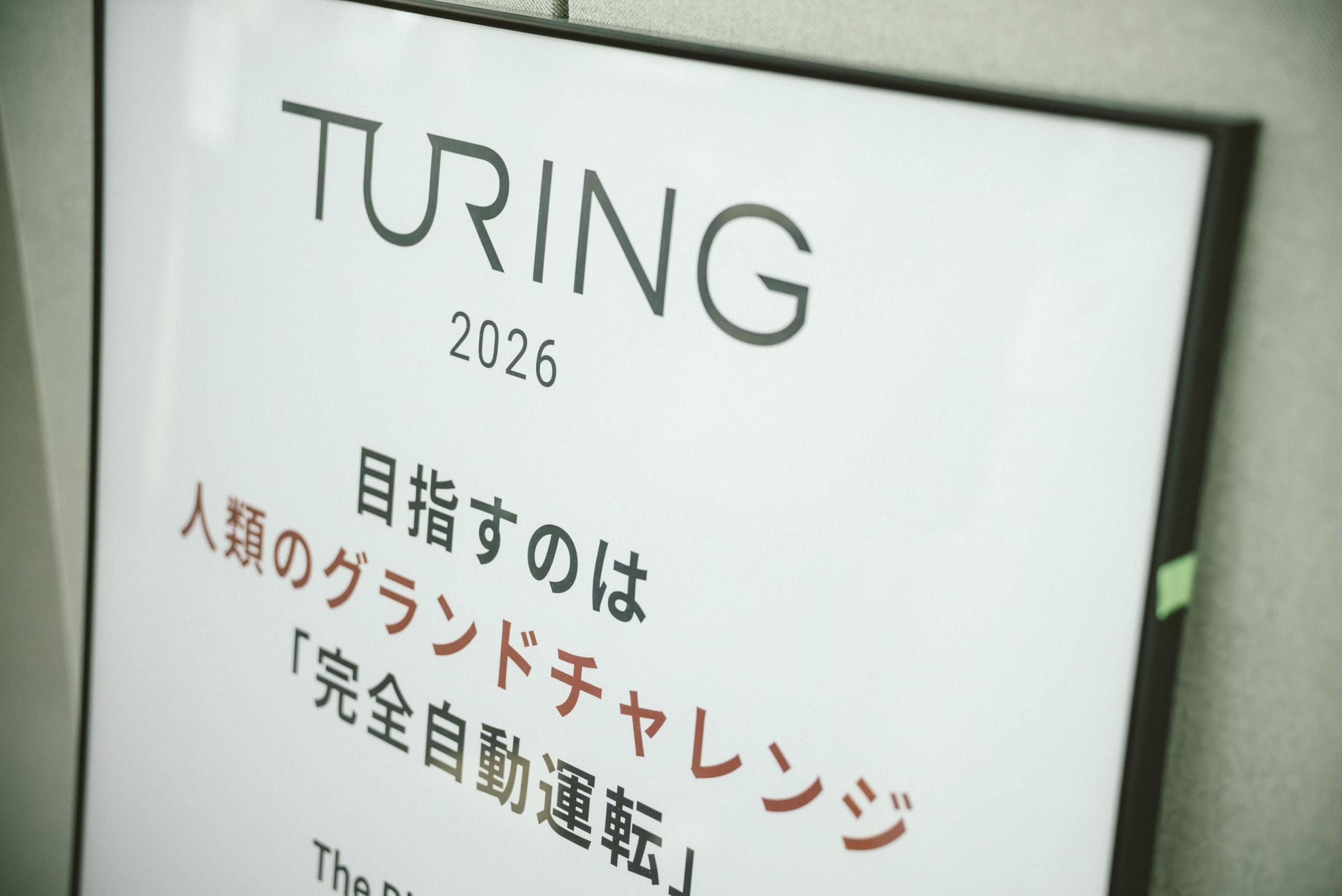
Turing is a startup driven by a bold mission: “We Overtake Tesla.”
How do we compete on the global stage? And what does working here mean for your career?
Here’s the full picture of Turing.
Our Mission: We Overtake Tesla
Our mission—stated without hesitation—is simple:
We Overtake Tesla.
This is not merely a declaration of competition. It is our commitment to redefining Japan’s mobility industry and AI technology at a global level.
From day one, Turing has bet on an End-to-End (E2E) approach.
Unlike conventional systems that rely on LiDAR and high-definition maps, our method uses camera inputs alone, with a large-scale neural network making driving decisions directly.
Even when the rest of the world was still undecided, we believed that building AI with capabilities equal to—or beyond—human drivers is the shortest path to full autonomy.
Today, the global trend is clearly moving toward E2E.
In this space—where AI meets automotive—we aim to compete with the world from Japan.
Our Technology and Tokyo30
As a key milestone toward our mission, we launched a company-wide initiative called “Tokyo30.”
The goal:
Enable fully autonomous driving in Tokyo for over 30 consecutive minutes—with no human intervention on the steering wheel, accelerator, or brake.
We achieved this in November 2025.
Our formula for tackling this challenge was clear:
Not genius-level programming, but overwhelming data and massive compute power.
Data Infrastructure (MLOps)
We operate our own fleet of data collection vehicles daily, building a system that has accumulated over 40,000 hours of driving data.
We have also developed JADD (Japan AI Driving Dataset)—a proprietary dataset designed specifically for autonomous driving AI—creating a foundation that competes globally in both scale and quality.
Compute Resources (GPU)
In generative AI development, compute is power.
Despite being a young startup, we have built Gaggle Cluster, a large-scale GPU cluster equipped with 96 of NVIDIA’s latest H100 GPUs. We aim to rank among Japan’s leaders in GPU capacity per engineer, and by the end of 2027, we plan to expand our compute capacity to 5–10 times its current level, reaching 3.5–7 EFLOPS.
We are not just building AI models—we are building the data and compute foundation required to make autonomous driving a reality.
Culture & Values
At Turing, our values serve as the compass guiding both our technology and our organization.
The Bitter Lesson
Scaling through compute—not handcrafted heuristics—wins in the long run.
We choose fundamental solutions from a long-term perspective.
Less is More
Code, modules, meetings—if the outcome is the same, less is better.
Constantly ask, “Can this be simplified?” Focus only on what truly matters.
Just Stick the Marshmallow
Perfect plans are overrated—what matters is building and testing quickly.
Avoid the hidden cost of hesitation and delay. Execute early, iterate often.
Small, Fast, and Evolving Teams
Keep teams small. Appoint and rotate leaders proactively based on fit.
In the midst of constant change, maintain respect and open communication.
Move Forward Anyway
Real progress comes with friction and discomfort.
Face difficult decisions head-on, embrace the pain as growth—and keep moving forward.
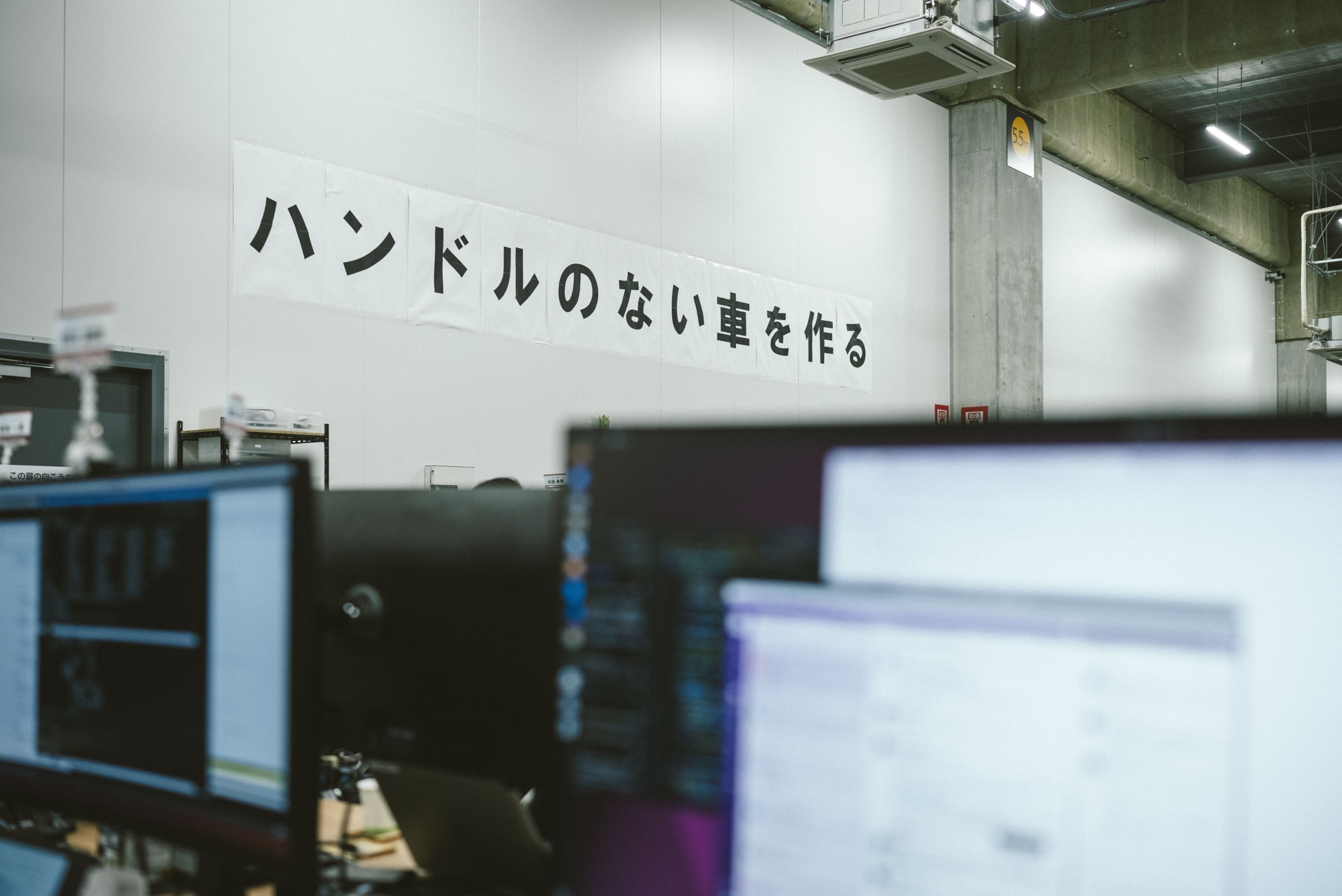
Work Environment: Empowering Builders
At Turing, we believe that exceptional work requires exceptional support—and we invest accordingly.
Developer Tools
All employees are provided with generative AI tools such as GitHub Copilot and ChatGPT.
In addition, through our Agentic Coding Program, engineers can freely use and expense up to $300 per month on AI tools and services.
Office & Remote Work
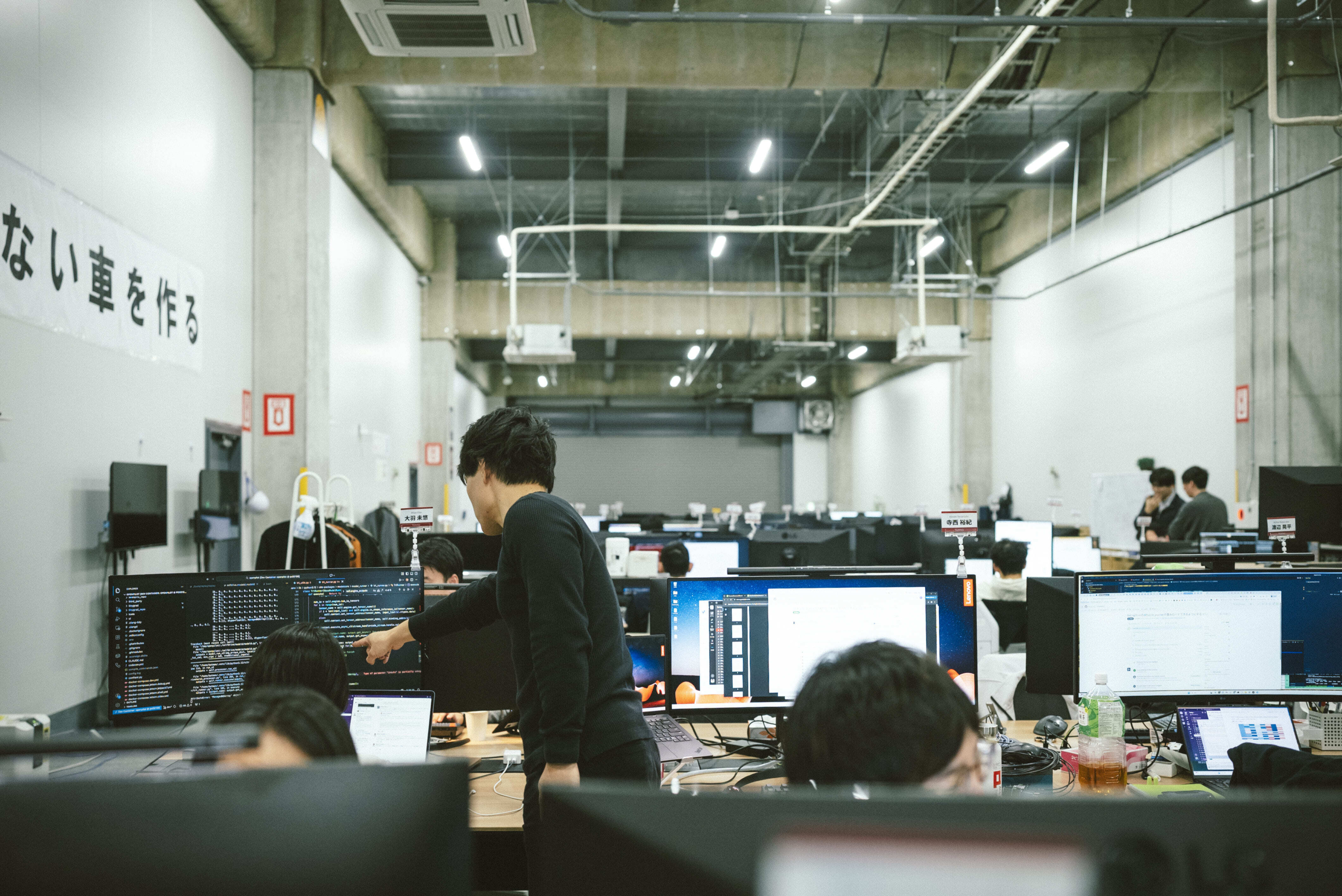
Our default is in-office work.This is essential for tightly integrating hardware (real vehicles) and software, enabling rapid development cycles.
At the same time, we offer flexibility for personal needs, including childcare and family responsibilities.
We support flex-time (core hours: 11:00–15:00), temporary leave during the day, and remote work when
Compensation & Evaluation
To maintain startup speed, we operate a simple performance review cycle with salary revisions twice a year.
In March 2026, we granted our first-ever stock options to all full-time employees, with additional allocations for those who deliver outstanding results.
A Team of Specialists
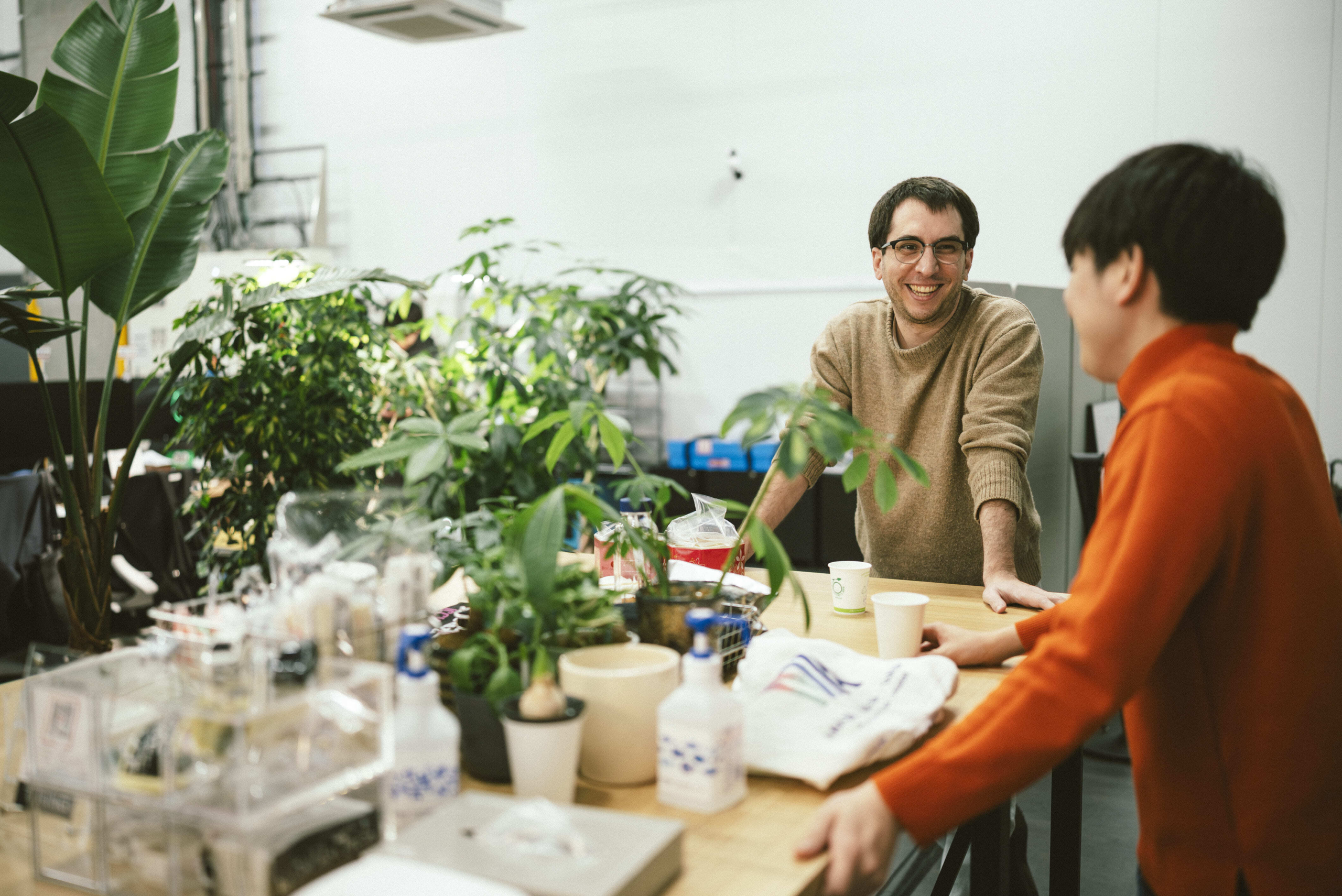
Turing brings together professionals from diverse backgrounds:
- Software engineers from leading tech companies
- Hardware engineers from major automotive manufacturers
- ML engineers with Kaggle Grandmaster titles
- Researchers from academia
What unites them is a shared ambition:
To build a future that doesn’t exist on the extension of today’s path.
Our team is driven by:
- The challenge of building E2E autonomous driving from scratch
- The excitement of seeing their code move a real vehicle
- The opportunity to create something globally impactful from Japan
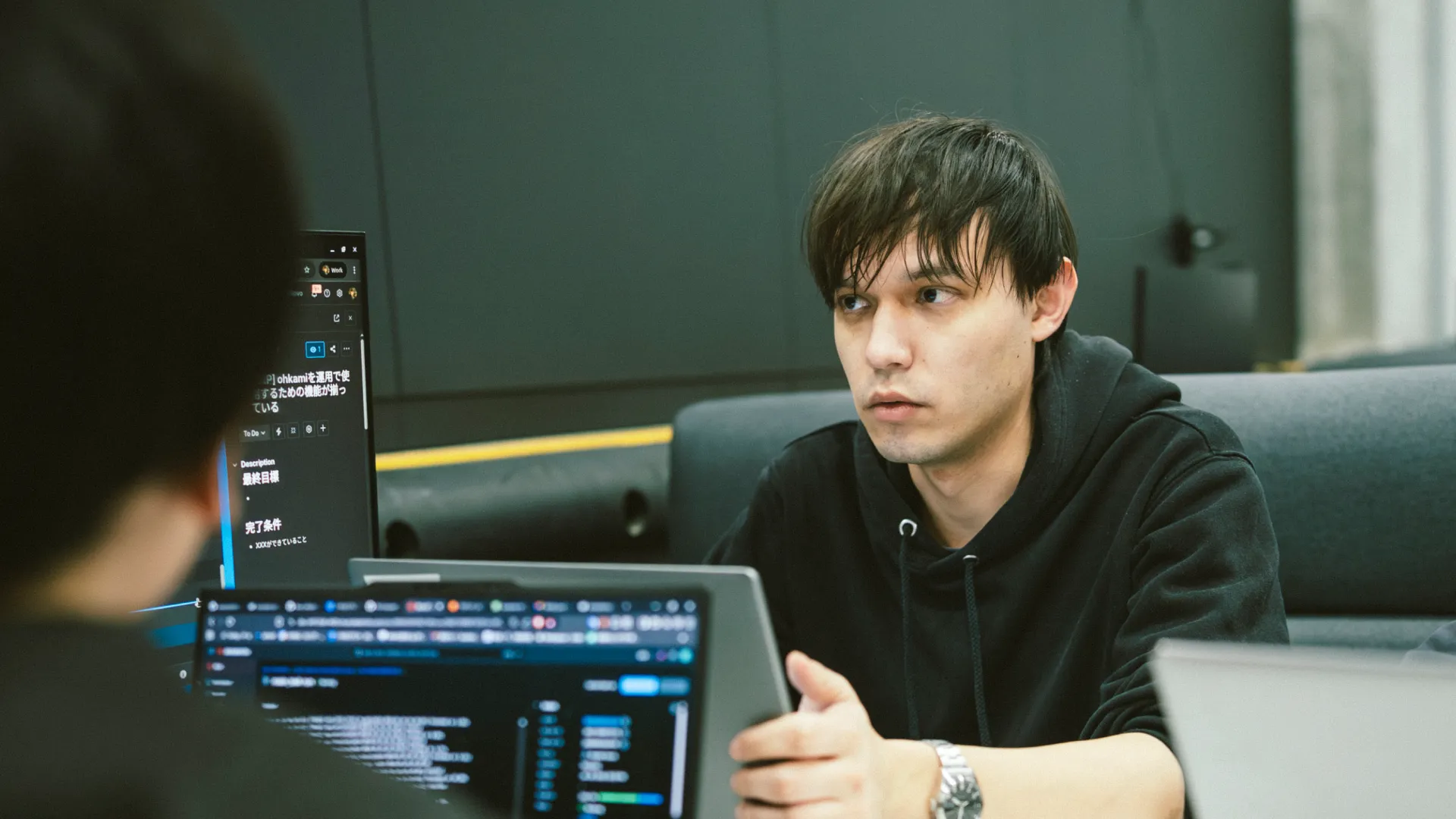
They collaborate across disciplines, pushing development forward together.
Looking Ahead
The automotive industry is undergoing a once-in-a-century transformation.
Yet in AI—a critical new frontier—Japan still lags behind.
What we need is an environment where exceptional talent can break free from existing constraints and truly take flight.
Our CEO, Issei Yamamoto, puts it this way:
“Autonomous driving is the biggest frontier there is.
If it succeeds, it becomes a business. If it fails, it doesn’t.
It’s a challenge where the risk is entirely concentrated in technology.”
Turing aims to complete a proof of concept, achieved with Tokyo30 in 2025,
and to bring fully autonomous driving to mass-produced vehicles by 2030.
The road ahead is far from easy.
We don’t have fully defined playbooks or stable routines.
What we have is something else:
A tangible sense that we might change the world—and the intensity of taking on that challenge every day.
“We Overtake Tesla.”
We’re looking for those who don’t dismiss this idea—
but are ready to make it real with us.